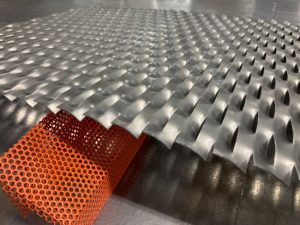
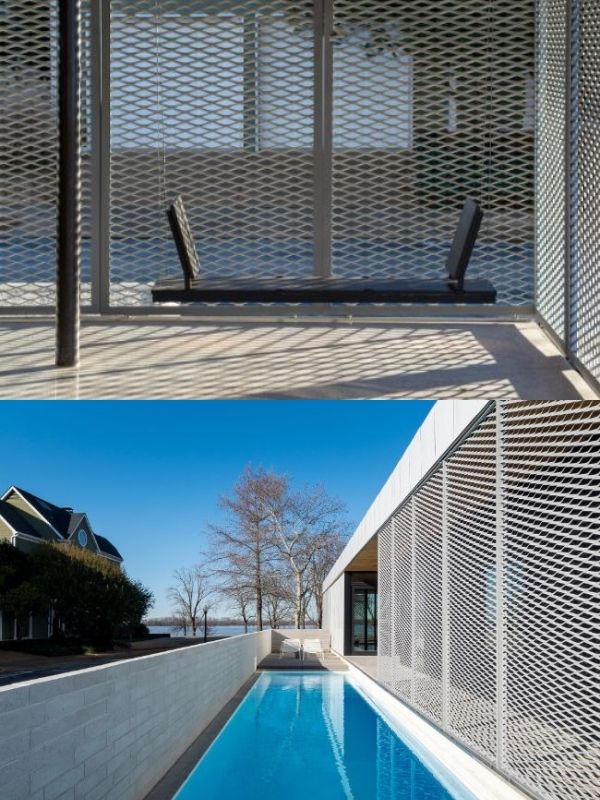
Blog

  • 4 Applications of Steel Wire Mesh In Construction

    4 Applications of Steel Wire Mesh In Construction

    Steel wire or the steel wire mesh is a continuous mesh made in a particular pattern. The two most common methods of manufacturing this wire mesh are weaving and welding. Corrosion-resistant and highly durable, these attributes of steel are also combined with a high tensile strength that is common in most wire meshes. Due to these properties, steel mesh is used in a plethora of industries, one of the major ones being construction.

    4 such common uses of steel mesh will be discussed here

    Perimeter Fencing

    In construction sites, it’s common to prohibit civilians from entering the area due to the hazardous nature of work. To do this effectively, steel wire mesh is used to barricade the area. Durable and easy to customize according to usage, this wire mesh also protects construction workers from heavy equipment and potentially dangerous zones within the construction site.

    Reinforcing Concrete

    Concrete is predominantly used in structures such as slabs, columns and roads. To reinforce the material, steel bars are used conventionally. However, steel wire mesh is an effective alternative that is more economically feasible. Due to their high strength and elastic properties, these wire meshes can successfully preserve the structural integrity of the concrete. Thus, when the concrete does crack with time, it doesn’t affect the core of the structure.

    Maintaining Roadways

    Steel mesh plays a significant role in highway maintenance in the form of barricades as well as reinforcing material for the asphalt. Roadway crews often deploy barriers made of these wire meshes to signify road closures. Furthermore, when this welded wire mesh is laid out in a hexagonal manner, it can solve several road-related issues such as surface rutting and cracking. Other benefits of using steel mesh in road construction include the prevention of asphalt cracking, also known as asphalt fatigue.

    Makeshift Retaining Walls

    In certain construction projects, there is a requirement of temporary retaining walls until one phase of the project is complete. In this case, wire meshes make excellent retaining walls as they are easy to set up and remove and can be done at fraction of the cost of other regular construction materials that are required for making a wall.

  • Most Common Methods of Creating Textured Sheet Metal

    Most Common Methods of Creating Textured Sheet Metal

    For aesthetic and utilitarian purposes, sheet metal is often given different textures. The design of the textured sheet metal mainly depends on how it will be used. One of the more common applications includes construction, where they are used to create doors, sidewalks, railings, walls and much more. To create these patterns, various techniques like hammering, rolling, heating and adding new raw materials to sheet metal surfaces are employed. These processes will be discussed below in detail.

    Common methods of manufacturing textured sheet metal.

    Hammering

    As the name implies, hammering is a technique that uses hammers, either manually or automatically, to create stresses on the surface of the sheet metal, thereby creating unique textures. Depending on the required design, hammers of varying sizes are employed. Hammering is generally used to shape soft metals such as gold, silver, aluminium, copper and tin.

    Rolling

    Mostly an automated process, rolling involves the use of machinery known as rolling mills. While conventional rolling mills are used to reduce metal thickness and make it more uniform, in the context of creating texture on metal sheets, the mills have a unique design or indentation that can be imprinted onto the sheet metal. Highly optimized for speed, the only thing to consider in this process is the softness of the metal sheet, for it should be more elastic than the rolling mills themselves.

    Heating

    Heating is a versatile process wherein the heat can be used directly to create textures as well as add new, colourful designs on the sheet metal. Furthermore, since heating a metal makes it more malleable, it can be used in tandem with hammering or rolling to create the desired product. Some typical heating methods involve using a furnace, blowtorch or manual heat treatment.

    Adding Raw Material

    Unique textures can also be created by adding new raw material to the surface of the base metal. Some of the most well-known metal additives are welding wire, casting metal and plate metal. Apart from improving the aesthetics of the sheet metal, using a strong additive can also improve the overall strength and performance of the base metal.

  • 4 Uses of Chicken Wire in Landscaping

    4 Uses of Chicken Wire in Landscaping

    The chicken wire, which is made from thin and flexible galvanized steel wire with hexagonal patterns, has been conventionally used for poultry confinement. However, this mesh material is not only limited to poultry farming and has other uses as well, such as landscaping.

    Here are 4 applications of chicken wire in landscaping.

    Reinforcing Concrete

    For small landscaping tasks that require concrete for non-structural and not too heavy load-bearing functions, chicken wire is a suitable candidate for reinforcement. While concrete can handle vertical stresses, it is vulnerable to horizontal stresses, which can be resolved by pouring it over chicken wire. Furthermore, this flexible steel wire also provides a degree of tensile strength to the concrete structure.

    Pest Control

    Chicken wire can be also used for pest control by fencing or encircling a garden, thereby keeping away pests from the plants/crops. To ensure protection from underground pests, a portion of the chicken wire can be buried in the ground. For keeping out smaller rodents and pests, the hexagonal gaps in the chicken wire should not exceed 0.5 inches.

    Apart from enclosing gardens, the mesh can also protect individual shrubs by rolling the wire across a solid, pre-fitted framework like stakes around each shrub.

    Bulk Storage

    Apart from pest control, chicken wires are suitable for storing large items in bulk in the yard area. For example, raked leaves can be stored in a container made of chicken wire. Simply drive stakes in the ground in a circular fashion, roll the wire around the perimeter and secure it with ties to create a solid framework. Here, raked leaves can be stored until they are used as compost or disposed of in an appropriate manner.

    Aesthetic Applications

    The most common landscaping application of chicken wire mesh is creating decorative elements or structures such as balls or wreaths for occasions like Christmas, which can be further decked with lights. It is also used as a backdrop to create unique sculptures and props for festivals like Halloween.

  • 5 Benefits of Using Copper Mesh

    5 Benefits of Using Copper Mesh

    Although steel is flexible and has excellent corrosion resistance, copper can have a longer lifespan in areas with high air salinity. As a result, copper mesh works well as a screen or guard against small animals. Copper mesh is created by using a soft and pliable version of the metal that is easily woven into a wire mesh of defined dimensions.

    The five benefits of using copper mesh

    Physical Characteristics

    Copper mesh is highly pliable yet strong. Hence, it can be woven into any form and pattern with relative ease. Plus, it has high thermal and electrical conductivity. These properties in combination with the metal’s long lifespan and corrosion resistance make it perfect for a variety of industrial applications.

    Efficient Barriers

    Many households use copper gutter guards and soffit screens because they’re efficient barriers against dust and debris. A soffit screen is usually installed in the attic to maintain good airflow and ambient temperature, thereby preventing dampness and mold formation. Moreover, since they are resistant to rust, property owners can use copper mesh screens for at least five years before the replacement becomes advisable.

    Effective Rodent Inhibitor

    Rodents, insects and other pests can be a major problem, and they are also able to cut or pass through loosely-spaced weave screens. The small weaves of a copper mesh, however, make them the ultimate rodent deterrent. Furthermore, copper meshes are much tougher than traditional steel wire mesh, making them damage-resistant.

    Antibacterial Properties

    Copper can kill bacteria on contact due to its antimicrobial properties. The high concentration of copper ions makes it difficult for bacteria to oxidize the metal, thereby weakening its effects. Therefore, it is safe to use protective copper screens and guards for effective filtering.

    Easy to Install

    Any property owner with a screwdriver and mesh installation guide can easily install copper mesh screens by themselves. However, it’s best to consult or enlist the help of professional installation teams if recesses and gutter lines are difficult to access, as these areas require special access equipment.

  • 4 Advantages Of Using Textured Metal Panels For Roofing

    4 Advantages Of Using Textured Metal Panels For Roofing

    Metal panels are composed of interlocking, uniform structures from either natural or pre-treated metals. These panels can be further sub categorized as non-textured or textured metal.

    A textured metal panel can be defined as a material that has undergone small, surface-level changes to create a coarse, aesthetic look. It can be created by a plethora of methods such as pressing, distressing, scratching and more. These textured metal panels can be used for roofing, as they offer four distinct advantages over smooth roof panels.

    Here are 4 merits of textured metal panels for roofing

    Glare Reduction

    Metal roofing has an aesthetic look, but the glare it emanates poses a potential risk. Textured metal roof panels mitigate this problem by adequately diffusing sunlight, thereby reducing the glare. According to the standardized gloss scale, textured panels fall in the low range (the low numbers on the scale signify low levels of glare).

    Unique Aesthetics

    Textured metal panels, when used right, can create unique aesthetic value and can enhance the look of a house or property. Apart from adding a touch of sophistication, the variety in textured patterns gives homeowners the opportunity to experiment, as these panels can be transformed to imitate wood, stone or even shingles.

    Offers Resistance Against Fading And Chalking

    Smooth metal roof panels face the problem of fading and chalking over the years, leading to a loss of colour and shine. Textured metal roof panels, on the other hand, are much more resilient by design, ensuring consistent colour retention for many years.

    Protection From Minor Scratches And Damages

    Most cold-rolled metal sheets and panels suffer from a problem known as oil canning. Essentially a form of wavy distortion, it can impact smooth metal panels and deteriorate their aesthetic quality. This issue is resolved by using metal panels that are textured, as their already distressed surface offers some protection from external forces, especially oil canning. Furthermore, textured panels are more resilient against scratches and minor scuffs.

    Apart from roofing, textured metal panels can be also used as a backsplash, as well as in millwork and cabinetry. Contact Ferrier Wire and Design Metals to place your order for textured metal panels today.

  • Ferrier Wire Stock Update: Re-Galvanized Hardware Cloth

    Ferrier Wire Stock Update: Re-Galvanized Hardware Cloth

    Over the past two years the world economy has experienced unprecedented shocks to supply chains and transportation logistics. Global border lockdowns, manufacturing reductions due to the COVID pandemic, and changes in production patterns of various industries have greatly affected global logistic networks as well as the availability and pricing of materials. Many organizations have incurred heavy losses due to this unpredictable situation.

    The Canadian supply chain ended up in an even more dire state due to the recent devastating floods in British Columbia that severely affected the maritime trade. Because of the floods, many routes between B.C. and the rest of Canada have been blocked off. This has led to a pileup of shipping containers at the West Coast terminals, with loaded ships anchored offshore waiting to be unloaded. This situation exacerbated supply shortages across the country.

    Ferrier Wire & Design Metals adapted to the supply shortage situation at an early stage. We were recently lucky enough to receive a container of wire mesh that replenished our stock for:

    Re-galvanized hardware cloth

    Specs in stock:
    HC ½ x ½ x 19 ga, 4′ x 100′ rolls
    HC ¼ x ¼ x 23 ga, 4′ x 100′ rolls

    Re-galvanized hardware cloth is a light wire mesh hot dip galvanized after welding or weaving. It is most commonly used in the HVAC and sheet metal industries to prevent birds and or debris from going through louvres or vents and entering ventilation systems. Another common use is as a bird screen and as a rodent screen.

    In addition to our stock of the hardware cloth, we have managed to keep inventory levels of our other products at pre-COVID levels and have suffered very few out of stock situations. The main issue we have had to deal with are rising prices. In some cases we have seen prices increase by more than 150% over the last 18 months. For some products we have been able to mitigate the effect of price increases by drawing from our extensive inventory accumulated prior to global inflation. Our hope is to see prices stabilize in 2022.

    Please let us know if you have any questions about any of our products.

  • Ferrier Wire & Design Metals 2021 Holiday Hours

    Ferrier Wire & Design Metals 2021 Holiday Hours

    Ferrier Wire & Design Metals 2021 Holiday Hours:
    Closed Wednesday December 22nd
    Re-opening Tuesday January 4th at 8:00 am
    Wishing all healthy, safe and happy holidays and all the best in 2022.

  • A Business Owner’s Plea to Stop Plagiarism

    A Business Owner’s Plea to Stop Plagiarism

    As we all know, a website is the lifeline of any small to mid-sized business in today’s internet-driven world. There is a lot of work that goes behind developing and maintaining a website – from creating the design to writing industry-specific content, to producing high-quality product images and, in Ferrier Wire’s case, generating unique product specification sheets. Apart from the countless hours put in to create an online presence, business owners spend thousands and thousands of dollars to ensure that the website can compete with other big businesses within their industries. The current version of our site and ecommerce platform took over three years to create.

    Ferrier Wire was one of the first companies in the wire mesh industry to have a professionally created website back in 1999. Imagine your dismay when someone simply copies and pastes your content and/or images, without any due credit, notification or warning. In this unique and specialized industry, we never thought about the possibility that we would be struck by content thieves. In 2008, a Canadian competitor lifted an entire inventory list and presented this content as their own. Further illustrating their dishonest business ethics, when contacted to ask them to remove the stolen content, we were repeatedly ignored. After conducting some research we decided not to pursue a legal challenge as we felt that it would be a waste of money and would probably not achieve anything substantial.

    Unfortunately, as of November 22, 2021, they still have our content on their site; they have been using and benefitting from our content for over 12 years. To further illustrate this widespread problem, one of our preferred partners in the USA has had to deal with content thieves on numerous occasions, with one still being an ongoing problem.

    Through this post, Ferrier Wire and Design Metals, would like to appeal to the conscience of businesses indulging in plagiarism. Maintaining a website, while juggling through the highs and lows of running a business, is challenging. It requires dedication, patience, time, effort, and a significant financial investment to build and maintain an online business presence. We urge businesses to stop stealing content as it adversely affects the efforts of other, thoughtful and caring business owners and directly and indirectly eats into their profits and growth. For the lack of a better word, plagiarism or content lifting is actually theft.

    At this point we believe that it is important to note that sometimes business owners may not be aware of the theft. This happened to Ferrier Wire early on. We learned that several of the images that had been posted on our site by our web developer were stolen from a company in the USA. We ordered them removed immediately, apologized profusely and severely admonished the developer (later we stopped working with them).

    To all the online customers, we request that you question your decision to support a business who participates in content theft as it undermines the hard work of other entrepreneurs in the market. To be sure, these questionable practices lack morals and business ethics and is a sign that they wouldn’t think twice before choosing profit over an honest job. We propose this knowing full well it is difficult to know if someone has stolen content, and it is not the responsibility of the consumer to determine this.

    Lastly, to all the businesses that are fighting against plagiarism, there is hope in the form of many tools and resources available online to remove stolen content. Digital Millennium Copyright Act allows you to send a DMCA takedown notice to the internet service provider that is hosting plagiarized content.

    Ferrier Wire Goods Company Ltd. can attest that all the content and images on Ferrier Wire and Design Metals’ website are plagiarism-free, are original content and have been carefully created by us and our online content provider. In cases where images and/or information has been provided by others we have written consent to use it (which we keep on file at all times). We are constantly working on content with the intent to inform and educate.

    If you have any thoughts or comments regarding this issue, please feel free to reach out to us at info@ferrierwire.com.

  • Product Spotlight: Louvre Expanded Metal Mesh

    Product Spotlight: Louvre Expanded Metal Mesh

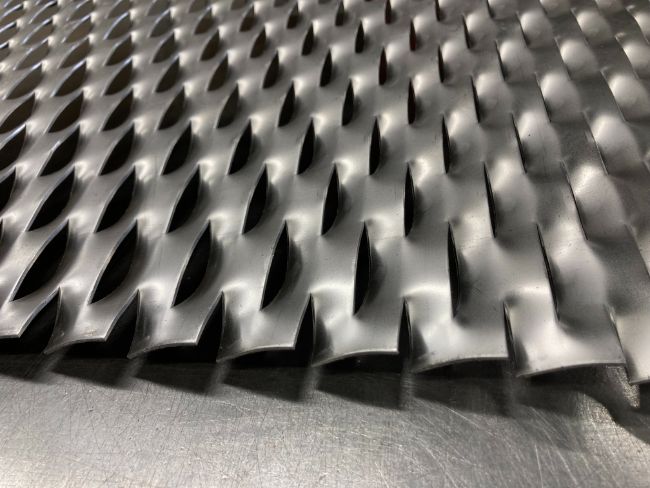
    Louvre expanded metal, commonly known as Louvre Mesh, has recently become a popular and sought-after product that Ferrier Wire and Design Metals offer. Over the past year, we have supplied Louvre expanded steel mesh for three different retail applications, with one of these having the potential to be reproduced Canada-wide. This metal’s applicability is quite versatile, a current project we are working on involves aluminum Louvre expanded metal mesh that is to be anodized to match the colour of curtain walls.

    Given the increased interest Louvre expanded metal mesh, let’s explore some of its key benefits, manufacturing process, and applications.

    Benefits of Louvre Expanded Metal

    • Aluminum material is highly durable.
    • Aluminum weighs less than the steel version.
    • Wastes less material compared to perforated metal.
    • Often more economical than other options.
    • Stronger than standard wire mesh.

    Why is it called Louvre Expanded Metal?

    The word Louvre refers to shutter-like angled strips of glass or wood in windows and doors that allow light and air to enter a room while keeping the rain out. Louvre expanded metal mesh also consists of angled openings on the metal surface that form a diamond-shaped pattern. When these expanded metals began to be utilized in windows and door frames, they became known as Louvre mesh/expanded metal.

    How is it manufactured?


    The process of manufacturing Louvre expanded metal mesh starts with a sheet or coil of steel being fed into a press where the tooling cuts and expands the metal as per the pattern specification input. The tooling keeps moving by one-half of the pattern across the steel surface, repeating the process of slitting and stretching the metal. The end-product that we receive is called raised or standard Louvre expanded metal and consists of slightly raised patterns. When this standard expanded metal is fed to a levelling roller, the surface is flattened to form a flattened expanded metal.

    Here are some industry-based terms to define the design specifications of regular expanded metal:

    SWO: Short Way Opening of the diamond pattern
    LWO: Long Way Opening of the diamond pattern
    SWD: Refers to the Short Way Dimension of a diamond pattern, meaning a shorter distance between the centre-to-centre bond
    LWD: Denotes the Long Way Dimension of a diamond pattern, meaning a longer distance between the centre-to-centre bond
    Thickness: Refers to the actual thickness of the expanded metal mesh. In the case of a flattened expanded metal, the thickness is defined as the overall thickness of flattened material.
    Orientation: Denoted by SWD x LWD (or LWD x SWD) of the diamond pattern. In general, most standard patterns have an orientation of 4’ SWD x 8’ LWD. If the orientation is the other way it will be stated as 4’ LWD x 8’ SWD OR 8’ x 4’.
    Nomenclature: The specs of expanded metal are denoted as a fraction or number representing the SWD, followed by a number representing the thickness. The letter F, if added represents flattened expanded metal, and if there is no letter, it represents a raised/standard expanded metal.

    For example: 1/2 – 16F denotes a flattened expanded metal with SWD = ~1/2” and a thickness 16 gauge. The higher the gauge number, the thinner the expanded metal will be.

    Applications

                   Pattern: Apex                                        Manufacturer: Amico Architectural Metals
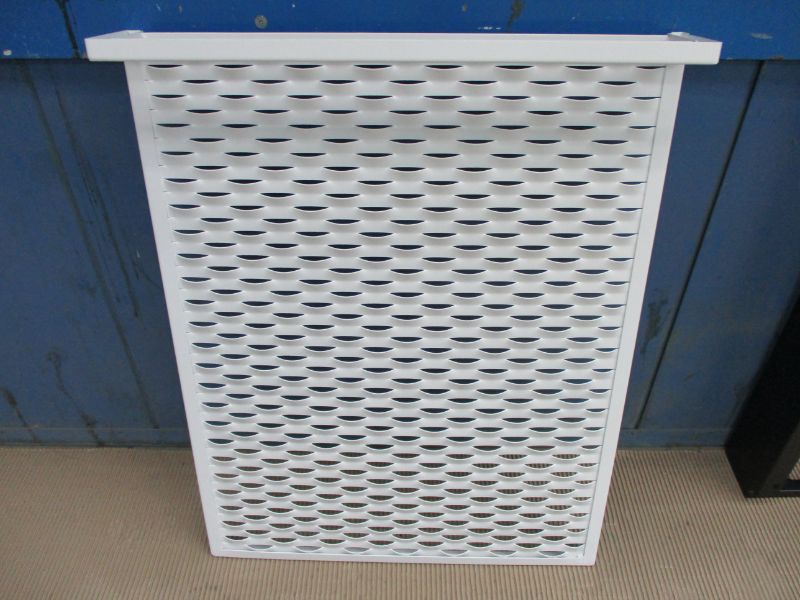
    • Design applications in retail, restaurant and commercial projects
    • Sun shade
    • Privacy screen
    • Heavy versions can be used as fencing and barrier material (cut resistant)

    Powder Coating Options

    Ferrier Wire offers powder coating options to add colour to regular steel Louvre expanded metal. The powder coating process involves applying dry powder by electrostatically charging the powdered particles to deposit onto the surface of the Louvre expanded metal mesh.

    As mentioned earlier, we also offer anodizing of aluminum Louvre expanded metals to add protection, durability and colour. This process involves submerging the aluminum material into an acidic bath and passing a current through it. This electrochemical process converts the surface of the material into a durable and corrosion resistant finish. Colour pigment can be added to the process.

    For more information about finishing options, please view our finishing blog.

    Overall, Louvre expanded metal mesh offers interesting options to add attractive aesthetic elements to architectural and design products while still providing practical qualities. For more information, please email us at: info@ferrierwire.com

  • 4 Uses of Perforated Metals in Building Design

    4 Uses of Perforated Metals in Building Design

    For decades, perforated metals have been used in chemical and automotive industries to make filters, radiators, protective screens, and air purifiers. Since metals have become appropriated to create aesthetic elements in modern home designs, a demand for perforated metals in architectural projects also increased.

    Before demonstrating how we can use this material, let us first look at what it is. Perforated metal is a sheet of metal with holes of a certain size on its surface. The size and shapes of the holes can be customized, with the standard perforation holes ranging from as little as 1 mm in diameter. Since shapes are customizable as well, many modern construction projects have been utilizing perforated metals with holes in the shapes of diamonds, crosses, squares, rectangles, etc.

    There are at least four ways to aesthetically incorporate perforated metals in building designs:

    #1. Stair balustrades, treads, and risers

    Perforated metals are perfect to be used for stair balustrades that stretch from floor to ceiling. They are also used in stair treads and risers because of their strength and durability. They provide more resistance against slipping and have an excellent load-bearing capacity for structural integrity. Best of all, they allow light and air circulation through the staircase.

    #2. Walkways

    Many open concept homes focus on transparency and the flow of light and air throughout the house. When it comes to walkways that connect different areas of the house, some home designers prefer perforated metals over wood or concrete as it doesn’t restrict the flow of light and adds to the visual appeal of the home.

    #3. Outdoor awning

    Perforated metals can also be used to create a fashionable awning on patios and porches. A thought-out design can add charm to the exterior of the home and protect the outdoor areas from excessive sun, rains, and snow.

    #4. Exterior facade

    Architects and designers are increasingly relying on perforated metals and wire meshes for creating exterior facades. These metal designs and meshes are eye-catching as well as sturdy and durable, so they easily protect the building’s exterior from inclement weather conditions. Some homeowners prefer customized perforated metal facades that are cut in elegant patterns and are coupled with light fittings to create a beautiful viewing experience at night.

    Want to know more about applications of perforated metals? Ferrier Wire and Design Metals work with reliable perforated metal manufacturers to deliver high quality materials.