Author: Ferrier Wire & Design Metals

  • Product Spotlight: The Royal Hotel’s Restoration With Ferrier Wire’s Expanded Metal

    Product Spotlight: The Royal Hotel’s Restoration With Ferrier Wire’s Expanded Metal

    The Royal Hotel, located on Main Street in Picton, Ontario was built in 1879 and was considered a prestigious destination for travellers from near and far. It was an impressive brick building with an ornate iron balcony running along the full length of the structure. Sadly, over time the clientele and economy changed, and the hotel closed its doors. For over a decade, the hotel sat untouched and eventually was boarded up and became a possible candidate for demolition.

    A local family saw the severe disrepair of the hotel and purchased the building in 2013 with the goal to restore The Royal to its former prestigious form. The goal was to make it a destination for attracting travellers once again. The plan was to preserve as much of the original property as possible but the building was in such disrepair that this was impossible. Extensive restorations began in 2016 and took approximately 5 years to complete. The results are stunning. Guest suites are tastefully decorated and are named after Ontario apple varieties as an homage to the local orchards. The beautiful restaurant has a very unique ceiling detail that reminds one of the undersides of a mushroom. The restaurant also boasts seasonal and locally available ingredients with an open-concept kitchen and a gorgeous patio surrounded by lush gardens. There is also a Finnish-inspired sauna at the spa where guests can relax. The Royal is now a beautiful mix of contemporary and traditional design while keeping its place as an important piece of history in this small town.

    Giannone Petricone Associates, architects for this project, incorporated several Ferrier Wire Ampliato expanded metal products both on the inside and the outside of this project. In the interior one of the patterns is used around the elevator and along the walls of the staircase. This decorative metal screen is reminiscent of accordion-like doors from antique elevators. The Ampliato MS 0020 pattern is used outside as background for the signage out front and as railing infill material at a side door entrance. Further around the back, another pattern is installed as railing infill material around the patio. Ivy, trees and other greenery weave through the openings of the material to bring nature to the patio. The Ampliato range of products is a family of expanded metal for architectural, design and industrial applications. Standard metals are aluminum, mild steel and stainless steel. The Ampliato products used in The Royal Hotel project are mild steel powder coated to protect them from the elements.

    If you have any questions about The Royal Hotel please visit: https://www.theroyalhotel.ca/ or GPAIA: https://www.gpaia.com/ If you have any questions about the Ampliato line of products, please feel free to call us at 647-799-3781 or email us at info@ferrierwire.com.

  • What Is Mesh Count And How Does It Differ From Micron Rating?

    What Is Mesh Count And How Does It Differ From Micron Rating?

    A woven wire mesh is made by weaving metal wires together in a grid-like pattern. Some common types include steel mesh, bronze mesh, copper mesh, aluminum mesh and more. Apart from wire diameter, another determining factor in wire mesh is mesh count. Its definition, importance, and the difference between mesh count and micron rating will be explored below.

    What Is Mesh Count?

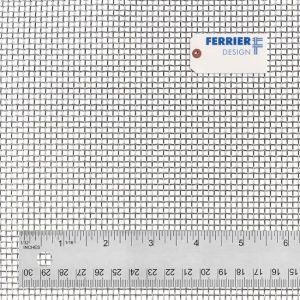
    It is defined as the number of holes per linear inch along the length and width of a woven wire mesh. Thus, a mesh count of 40X40 implies that the wire mesh has 40 holes per linear inch along the width and 40 holes per linear inch along the length. However, mesh count can vary according to the layout of the wire. For instance, a rectangular mesh can have a mesh count of 15X20, implying 15 and 20 holes per linear inch along the width and length of the mesh respectively.

    Importance Of Mesh Count

    Mesh count can impact the flow rate of the wire mesh, that is, the volume of particles that can pass through the mesh. Having an improper mesh count can, therefore, lead to uneven pressure buildup in the wire mesh, causing wear and tear. Conversely, having a well-calibrated mesh count will make the mesh cost-effective and energy efficient.

    How Is It Different From A Micron Rating?

    Micron rating is defined as the opening between two parallel wires of a mesh, whose dimensions are below 1 millimetre. In the case of a mesh count, this opening is measured in terms of inches or millimetres. But if the opening is too small, the measurement changes to a micron rating. Therefore, a micron rating signifies that the wire mesh is a filter cloth, as such dimensions find value in filtration applications.

    Ferrier Wire Goods Company primarily manufactures woven wire meshes, textured metal sheets, as well as perforated and decorative metal panels. For queries, reach out to us today.

    What Is Mesh Count And How Does It Differ From Micron Rating?

  • 4 Prominent Wire Mesh Materials Suitable For Cabinetry

    4 Prominent Wire Mesh Materials Suitable For Cabinetry

    Wire meshes are used for numerous decorative purposes in the form of millwork or cabinetry. Pertaining to cabinetry, some wire meshes are more suitable for cabinet inserts than others. 4 such options will be addressed in this blog, so designers can make the best possible choice.

    4 popular mesh materials for cabinet inserts

    Brass Mesh

    An alloy of copper and zinc, a brass mesh is known for its golden hue. For a more antique-style of finish, a brass mesh can also be plated. It can be used in dining room cabinets, kitchen cabinets, media consoles, or in wine cabinets. Be aware that it can develop a greenish tinge if it gets wet. Hence, use it in areas where there is limited moisture.

    Bronze Mesh

    Bronze is made of copper and tin, with additional phosphorus in some cases. Since the alloy is predominantly made of copper, it has its trademark reddish tinge. A hand-rubbed variation of the copper mesh is ideal as a cabinet insert. Lastly, the lack of iron in its composition makes it useful in moisture-prone areas such as bathrooms, kitchens and bars.

    Nickel Mesh

    Nickel mesh offers an industrial aesthetic with its chrome finish, making it a great fit for cabinets in offices. For a more darkened, antique tone, it can be hand-rubbed before installation. Like bronze mesh, nickel is also resistant to moisture, making it suitable as a cabinet insert in laundry rooms, bathrooms, and kitchen cabinets.

    Stainless Steel Mesh

    A versatile and durable alloy made of iron, nickel and chromium, the stainless steel mesh has a metallic sheen. It is also highly resistant to corrosion and moisture, so it can be used as a decorative cabinet insert in any part of the house.

    Apart from the material used in cabinet inserts, it’s also essential to determine the weave and crimp styles of the wire mesh. These will be addressed in a future blog.

    4 Prominent Wire Mesh Materials Suitable For Cabinetry

  • How Can Woven Wire Mesh Be Optimally Used In A Balustrade?

    How Can Woven Wire Mesh Be Optimally Used In A Balustrade?

    Woven wire mesh is used in many architectural applications. With variations like stainless steel wire mesh, aluminum mesh, copper mesh and more, they are primarily used in reinforcing concrete, especially steel meshes. However, they can also be applied to a balustrade. Architects and designers often overlook aesthetics in balustrades, but with a woven wire mesh, they can ascertain material and design quality. Here’s how a wire mesh can be utilized in a balustrade and why designers must go for this material.

    Utilizing woven wire mesh in a balustrade

    The balustrade railings make up the core of the design. In a typical scenario, wire meshes are supplied as infill panels to the railing manufacturers, who apply them to the railings as a decorative element during fabrication.

    Alternatively, they can be applied to a frame, which is subsequently bolted to the railing system. By taking a square tube frame and bending the wire mesh at 90-degree angles, they can be conveniently spot welded to the frame.

    Why must architects go for wire meshes in balustrades?

    1. Lighter than common infill materials like glass
    Glass is a common feature in balustrades. However, some versions of it tend to be heavy. Wire meshes are a lighter option while still maintaining a sense of transparency. Subsequently, the load on the entire system is reduced.

    2. Safety compliant and customizable
    A major concern for architects and designers is to comply with local safety ordinances when it comes to balustrades. This is achievable with woven wire meshes as they can be customized. Therefore, these panels can be fabricated to suit the safety compliance codes.

    3. Reduced material wastage
    When a balustrade is accommodating a stairwell that is sloping at an angle, it is also required to match the contour. A pliable material, like a woven wire mesh, can be used here, as it can be adjusted to fit the slopes and angles of the frame/railing. Thus, it guarantees less material wastage.

    Thus, a woven wire mesh can be integrated into a balustrade optimally.

    How Can Woven Wire Mesh Be Optimally Used In A Balustrade?

  • Ferrier Wire + Design Metals: Family Holiday Hours 2023

    Ferrier Wire + Design Metals: Family Holiday Hours 2023

    In order to celebrate a very special occasion for a family member Ferrier Wire and Design Metals will be closed:

    The entire week of February from the 13th to the 20th

    RE-OPENING: Tuesday, February 21st at 8:00 am

    We apologize for any inconvenience this may cause.

  • FERRIER WIRE NEW ARABESQUE PERFORATED METAL PATTERN

    FERRIER WIRE NEW ARABESQUE PERFORATED METAL PATTERN

    Ferrier Wire and Design Metals are proud to introduce our new design perforated metal pattern “Arabesque”

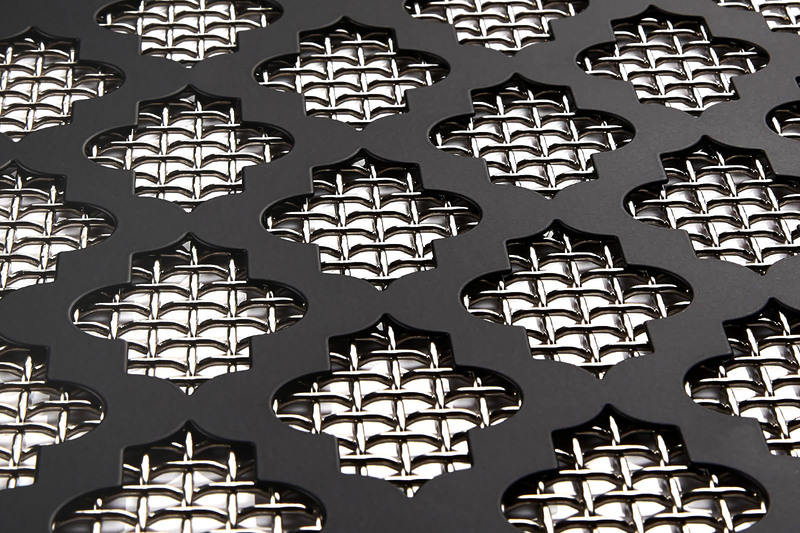
    The pattern has a middle eastern influence and is meant to conjure up images of Morocco and Casablanca. The purpose of this article is to discuss the creative process, the manufacturing of, and applications for this new Arabesque pattern.

    For years we have been searching for the Arabesque pattern. Reaching out to our perforated metal sources revealed that those that had at one time offered this pattern either no longer had the tooling or it was in disrepair. The addition of our Euromac CNC turret punch machine has provided us with the opportunity to manufacture this pattern ourselves. First, we approached Aries Design with the concept. Our collaboration with them resulted in the creation of a CAD drawing of the pattern. This in turn was then used by Mate Precision Technologies to custom-make the tooling for us. The tooling consists of two main parts: the tool (or punch) and the die. The tool penetrates through the metal into the die. This is a single-hit process, meaning the machine punches one pattern at a time. The tooling is stationary and the material gets moved around by the CNC-controlled arm (please see video). While this is not the quickest method of perforating metal it is more economical than water jet or laser cutting. We are still experimenting with the tooling and at the moment the maximum sheet size we can offer is 36” x 72”. Currently, we are offering this pattern on 24 ga galvanized sheets and 16 ga mild steel sheet. Both of these materials can be powder coated and the mild steel 16 ga material can also be plated. This is a custom, made-to-order product and lead times will depend on sizes and quantities.

    The Arabesque pattern offers an attractive option for cabinetry, millwork, dividers, railing infill panels, privacy screens, etc. Sectors that could use this pattern include hospitality, retail, restaurants and bars, presentation centers, and residential development to name a few. The actual opening of the pattern and percentage of the open area offers an interesting design element allowing for visibility of items behind the pattern. For example, as a liquor cabinet door insert, allowing one to view the bottles inside the cabinet. The transparency or openness can be varied by introducing an additional layer of weavemesh behind the Arabesque pattern. We offer brass, bronze, copper and stainless steel options with a range of spacings and percent open areas.

    We invite you to contact us if you have any questions about our new Arabesque pattern or any of our other design-perforated patterns. We will continue to expand our line of design perforated metal products. Please contact us if you have a project with a unique design pattern in mind. Samples of our Arabesque pattern are available on request.

  • How To Choose Between Brass And Stainless Steel Mesh?

    How To Choose Between Brass And Stainless Steel Mesh?

    There are plenty of variations when it comes to wire mesh. From stainless steel to brass and everything in between, there is an overwhelming number of options to choose from. So how to figure out which one is right for a particular project? To help narrow down the selection, here’s a comparison between brass and stainless steel mesh.

    Difference Between Brass And Stainless Steel Mesh

    Brass Is Softer And Easier To Form

    When deciding between brass and stainless steel mesh, it is important to consider the different properties of each material. Brass mesh is a softer metal, which makes it easier to form into shapes. It is also more malleable, meaning that it can be hammered or shaped without breaking. Stainless steel, on the other hand, is a harder metal that is more resistant to wear and tear. While it may be more difficult to work with, stainless steel mesh will last longer and stand up to more wear and tear over time.

    Addition Of Copper Gives Antibacterial Properties To Brass

    Copper is a well-known antimicrobial agent and has been used in hospitals and other medical settings for many years to help prevent the spread of infection. An inherent element of the brass mesh, it makes it effective at preventing the growth of bacteria, mould, and mildew. This makes brass mesh an excellent choice for use in applications where public health and safety are a concern, such as food processing facilities or water treatment plants.

    The Presence Of Chromium Makes Stainless Steel More Heat Resistant

    Chromium is an important element in the production of stainless steel. The presence of chromium makes stainless steel more heat-resistant than other types of steel. This property is especially important in applications where high temperatures are present, such as in the automotive and aerospace industries. Stainless steel mesh can be used in a variety of applications, including exhaust systems, brake lines, and fuel lines.

    Choosing Between The Two

    For Handling Abrasive Materials

    When it comes to choosing between brass and stainless steel mesh for handling abrasive materials, stainless steel is the better choice. Since the brass mesh is softer, it can suffer greater damage from these coarse materials.

    For More Emphasis On Sanitation

    Brass mesh is an excellent choice for areas where sanitation is a priority. As mentioned above, this material is naturally antimicrobial and resists the growth of bacteria, mould, and mildew. It’s also easy to clean and disinfect, hence it is the better choice in this case.

  • 3 Popular Ways To Fabricate Wire Meshes

    3 Popular Ways To Fabricate Wire Meshes

    Wire mesh is one of the most versatile materials in manufacturing and engineering. From chicken wire, bronze mesh and copper mesh to even stainless steel wire mesh, they have a wide range of industrial applications. But how are wire meshes fabricated? In this blog post, the three popular methods used for fabricating wire meshes: welding, shearing and punching will be examined.

    3 methods of fabrication.

    Welding

    Welding is a popular way to fabricate wire meshes because it is a fast and efficient way to create a strong joint between two pieces of metal. Welding can be done by using an electric arc, gas flame, or laser beam to heat the metal and create a weld bead. This method is mostly used to create a welded wire mesh, be it carbon steel, stainless steel, or galvanized steel. The result is a strong and rigid grid-like structure which finds use in many industries, especially construction for reinforcing concrete.

    Shearing

    There are many ways to fabricate wire meshes, but one of the most popular is shearing. Shearing is a process in which a piece of metal is cut into two pieces using a power shear. This method is often used to create straight or angled cuts in metal sheets or plates. It can also be used to cut wire mesh to size. This is particularly useful for pre-existing woven wire meshes that need to be fitted into a particular space.

    Punching

    Punching is done using a punch press, which is a machine that uses moulds to create shapes out of wire mesh. The moulds are placed on the bed of the machine, and the wire mesh is fed through the moulds. The punch press then cuts the wire mesh into the desired shape.

    Ferrier Wire Goods Company Ltd. manufactures a wide range of wire meshes such as bronze mesh, copper mesh, stainless steel wire mesh, and more. Contact us to place your order today.

  • 4 Benefits Of Stainless Steel Backsplash

    4 Benefits Of Stainless Steel Backsplash

    When it comes to remodelling a kitchen, the backsplash can make or break the look. There are a variety of materials one can use for their backsplash. It ultimately depends on the individual budget and style preferences. Typical materials used are tiles or marble. However, stainless steel is also a good candidate. Apart from its use as a stainless steel wire mesh, this alloy can also become an attractive backsplash. In this blog, a brief explanation of this backsplash and its 4 benefits will be listed.

    Merits Of Stainless Steel Backsplash.

    What is a stainless steel backsplash?

    A stainless steel backsplash is a sheet of stainless steel that is placed over the back wall of a kitchen stove. This backsplash protects the wall from grease, food splatters, and heat damage. It is easy to clean and maintain, and it creates a contemporary look in the kitchen. It can be made of plain stainless steel sheets or textured sheet metal.

    Benefits Of Stainless Steel Backsplash

    Hygenic/Easy To Clean
    Stainless steel is one of the easiest materials to keep clean. Because it is non-porous, it does not absorb dirt, grime, or other contaminants. That means it can be easily cleaned with a quick wipe down with a damp cloth. Vigorous scrubbing or using harsh chemicals can be avoided altogether.

    Heat Resistant
    One of the major benefits of having a stainless steel backsplash is the heat resistance that it offers. Stainless steel can withstand high temperatures without being damaged, making it an ideal choice for areas behind cooktops and ranges.

    Extremely Durable
    Stainless steel backsplashes are extremely durable and can last for years. They are easy to clean and maintain, and are resistant to scratches, staining, and chipping. As mentioned above, stainless steel backsplashes are also heat resistant, making them ideal for use in kitchens.

    Can Make Kitchen Look More Spacious
    A reflective surface can make a kitchen look more spacious. Stainless steel backsplashes reflect light and make the space appear larger. This is a distinct advantage in kitchens that is small or cramped or use light colours.

    Ferrier Wire Good Company Inc. offers steel meshes, copper meshes, bronze mesh, chicken wire, and more, apart from textured sheet metal and decorative panels. To know more about these products, contact us today.

  • 4 Decorative Uses Of Chicken Wire

    4 Decorative Uses Of Chicken Wire

    When it comes to chicken wire, its uses are practical and functional. It’s used as a fence to keep chickens safe from predators, and it’s often used in construction projects. However, it can also be used for decorative purposes. Chicken wire has the potential to add a unique touch to any room. In this blog post, 4 unique decorative uses of chicken wire will be discussed.

    Applications Of Chicken Wire

    Framed Sign With Wreaths

    All one requires is a frame, chicken wire, some fake greenery, and some festive decorations. Start by attaching the chicken wire to the frame. Staples or glue can be used to hold it in place. Then, start adding the greenery to the chicken wire. Once that is in greenery in place, start adding other decorations such as lights, bows, ribbons, ornaments, etc.

    Nifty Lampshade

    It can be used to create everything from lampshades to wall art. They can be used to create a one-of-a-kind lampshade by wrapping chicken wire around an existing shade. With such DIY decor rising in prominence, it is a creative and inexpensive way to add personality to any decor.

    Cabinet Doors

    One of the most popular ways to use chicken wire is to create cabinet doors. This is a relatively easy project that can be done over a weekend. Simply measure and cut the chicken wire to fit the opening of the cabinets, then secure it in place with staples or small nails. For an extra touch, one can add a decorative trim around the edges of the chicken wire.

    Hanging Baskets

    Hanging baskets are a great way to add some extra decoration and storage space to a yard or garden. Chicken wire is the perfect material to use for these baskets because it is lightweight and easy to work with. To make a hanging basket, start by cutting a piece of chicken wire that is big enough to fit around the bottom of the basket. Make sure to leave about an inch of extra wire on each side so it can be twisted together. Next, shape the chicken wire into a cylinder and twist the ends together. This can be used to raise plants, hold fruits and vegetables, or various knick-knacks.

    Apart from chicken wire, Ferrier Wire and Design Metals also manufacture brass mesh, copper mesh, stainless steel wire mesh, and more. Contact us to place your order today.